In-Depth Guide & Coastal Advice
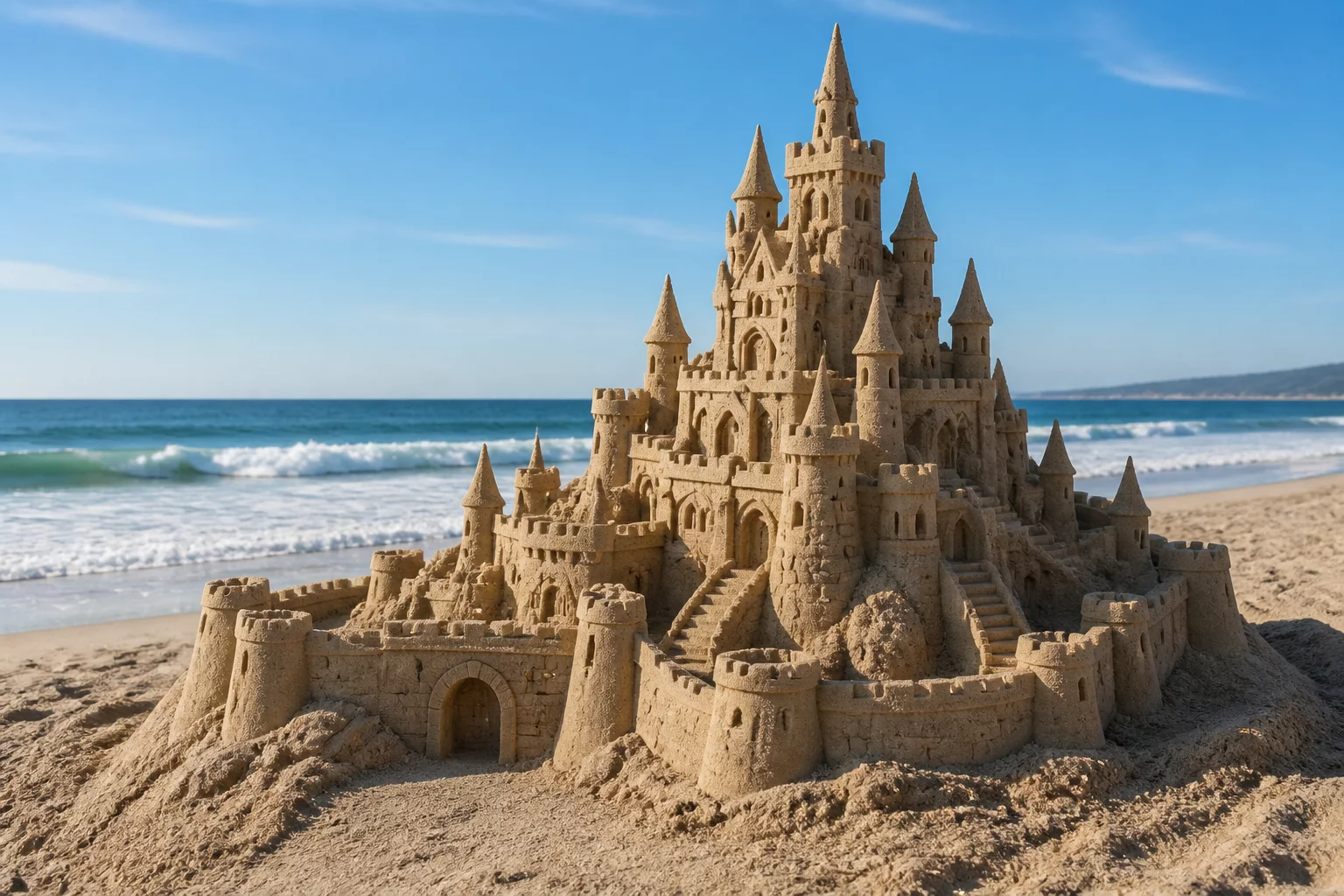
Building an impressive sand fortress is far more than a casual afternoon pastime. It represents a delightful blend of fluid physics, soil mechanics, and pure seaside creativity. Most beachgoers struggle with crumbling walls simply because they try shaping dry sand or dumping loose material directly from plastic buckets. With a few foundational techniques, anyone can construct sturdy, multi-tiered battlements that easily withstand coastal winds.
Understanding Sand Mechanics & Water Saturation
The true secret behind monumental sand sculpture lies in water tension. Microscopic water droplets coat individual mineral grains, drawing them tightly together through capillary action. Too little water causes brittle avalanches, while excess standing water turns your quarry into slurry. You want sand that packs firmly like damp brown sugar without dripping surplus liquid.
- Choose fine, angular sand closer to the waterline rather than smooth, coarse grains from dry dunes.
- Utilize bottomless buckets or wooden forms, tamping damp sand in progressive five-centimetre layers.
- Continuously mist your carving area with a small spray bottle to offset rapid sun and wind dehydration.
Essential Sculpting Techniques for Dramatic Detail
Once you have compacted a solid pyramid or column of sand, treat it like a block of soft stone. Rather than piling extra features onto the exterior, carve away negative space to reveal towers, staircases, and ramparts. Use a straight palette knife or flexible baking spatula to plane flat walls, then gently blow away loose grains with a drinking straw to preserve clean lines.
A great sandcastle is not formed by piling sand upward, but by compressing a solid monolith and carving away everything that does not belong to the fortress.
Engineering Moats and Shoreline Defense Walls
Timing the tidal cycle is crucial for your sandcastle's longevity. Position your primary base just above the high-water line, and excavate a wide retaining moat around the perimeter. Direct the moat overflow toward a secondary runoff trench to prevent sudden wave swells from saturating the base prematurely, keeping your citadel standing proudly for afternoon photos.




Community Discussions & Thoughts
Alex
Great Family Beach Project!
My kids loved these techniques. We spent three hours constructing an amazing sand fortress with towers and stairs using the compaction tips!
Emma
The Moat Technique Works!
Building a moat is the best part. Diverting the rising afternoon tide gave our castle another hour before the waves reached the main walls.
Join the Discussion
Have tips or questions about this beach guide? Share your comments below.